

Journal of Ocular Biology
Download PDF
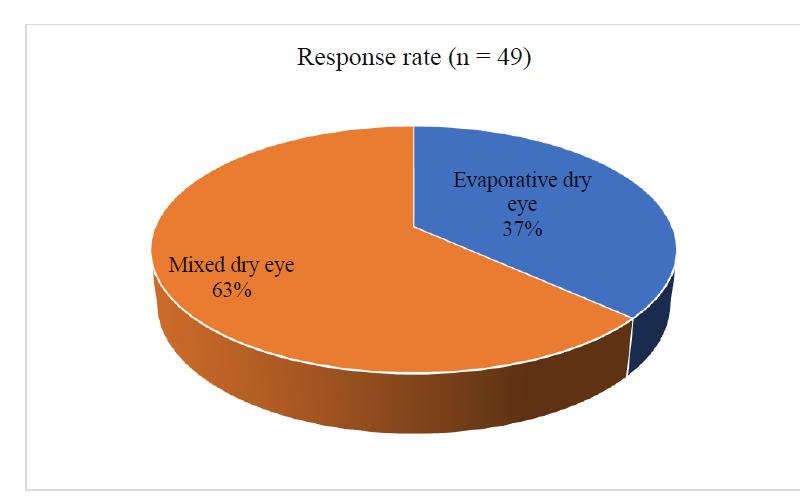 Figure 1:Distribution of responses on type of DED most commonly
diagnosed in clinical practice.
Figure 1:Distribution of responses on type of DED most commonly
diagnosed in clinical practice.
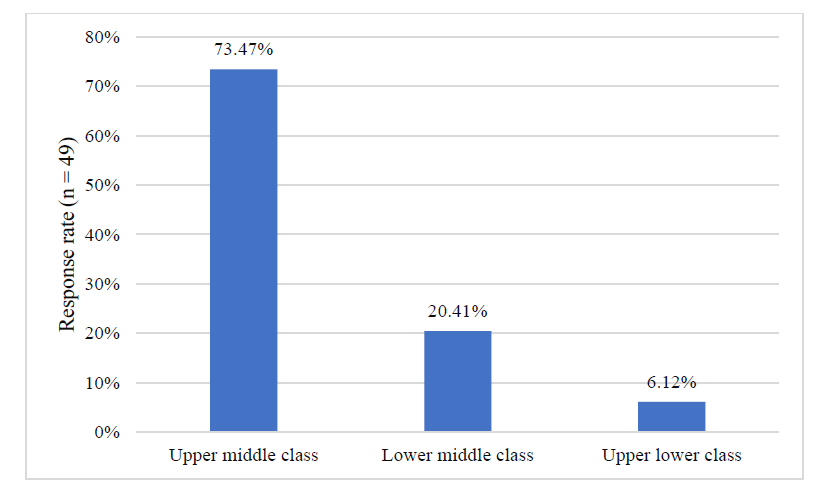 Figure 2:Distribution of responses on patients belonging socioeconomic
group most frequently diagnosed with DED in clinical practice.
Figure 2:Distribution of responses on patients belonging socioeconomic
group most frequently diagnosed with DED in clinical practice.
 Table 1:Distribution of responses on age group most commonly diagnosed
with DED in clinical practice.
Table 1:Distribution of responses on age group most commonly diagnosed
with DED in clinical practice.
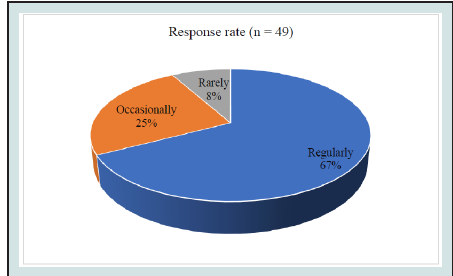 Figure 3:Distribution of responses on frequency of monitoring patients for
potential side effects or complications of medications.
Figure 3:Distribution of responses on frequency of monitoring patients for
potential side effects or complications of medications.
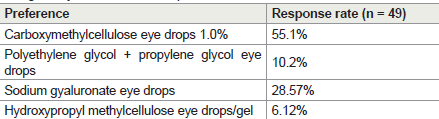 Table 2:Distribution of responses on preferred lubricant in patients with
allergic conjunctivitis in clinical practice.
Table 2:Distribution of responses on preferred lubricant in patients with
allergic conjunctivitis in clinical practice.
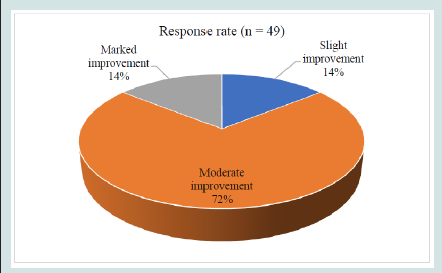 Figure 4:Distribution of responses on rating the outcomes with CMC 1%
eye drops in patients with DED on a 5-point scale [global improvement scale]
based on clinical experience.
Figure 4:Distribution of responses on rating the outcomes with CMC 1%
eye drops in patients with DED on a 5-point scale [global improvement scale]
based on clinical experience.
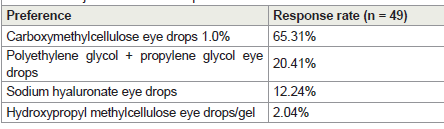 Table 3:Distribution of responses on preferred lubricant in patients with acute
infectious conjunctivitis in clinical practice.
Table 3:Distribution of responses on preferred lubricant in patients with acute
infectious conjunctivitis in clinical practice.
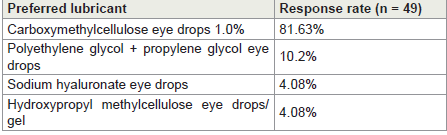 Table 4:Distribution of responses on preferred lubricant following
superficial corneal foreign body removal in clinical practice.
Table 4:Distribution of responses on preferred lubricant following
superficial corneal foreign body removal in clinical practice.
Research Article
Expert Perspectives and Preferences in the Diagnosis and Management of Dry Eye Disease and Ocular Lubricant use: A Questionnaire-Based Survey Among Indian Ophthalmologists
Manjula S1* and Krishna Kumar M2
1Department of Medical Services, Micro Labs Limited, Bangalore,
Karnataka, India
2Department of Medical Services, Micro Labs Limited, Bangalore, Karnataka, India
2Department of Medical Services, Micro Labs Limited, Bangalore, Karnataka, India
*Address for Correspondence:Dr Manjula S, Department of Medical Services, Micro Labs Limited, Bangalore, Karnataka, India. Email Id: drmanjulas@gmail.com
Submission: 07 July, 2026
Accepted: 19 August, 2026
Published: 22 August, 2026
Copyright: © 2026 Manjula S, et al. This is an open access article
distributed under the Creative Commons Attribution License, which
permits unrestricted use, distribution, and reproduction in any medium,
provided the original work is properly cited.
Keywords:DED; CMC 1.0% Eye Drops; Artificial Tears;
Ophthalmologists; Ocular Surface Disorders; Clinical Practice.
Abstract
Objective: To assess the perspectives and preferences of Indian
ophthalmologists in the diagnosis and management of dry eye disease
(DED), including diagnostic approaches, ocular lubricant preferences,
safety monitoring, and the perceived clinical effectiveness of
carboxymethylcellulose (CMC) 1.0% eye drops.
Methods: A cross-sectional survey was conducted among ophthalmologists across India using a structured questionnaire to assess routine clinical practices in the diagnosis and management of DED. Responses related to diagnostic approaches, ocular lubricant preferences, safety monitoring, adverse effects, and clinical outcomes were analyzed descriptively and presented as frequencies and percentages using Microsoft Excel.
Results: A total of 49 ophthalmologists participated in the survey. Nearly 65% of respondents reported that DED was most commonly diagnosed among individuals aged 30-45 years in routine clinical practice. Among the participating ophthalmologists, 63.27% reported mixed dry eye as the DED subtype they most frequently encountered in routine clinical practice, while 73% observed that DED was more common among patients belonging to the upper-middle socioeconomic group. More than half of the respondents (55.10%) preferred CMC 1.0% eye drops as the lubricant of choice for patients with allergic conjunctivitis, and 65% preferred the same formulation for the management of acute infectious conjunctivitis. A substantial proportion of ophthalmologists (81.63%) reported prescribing CMC 1.0% eye drops following superficial corneal foreign body removal. Approximately 67% of respondents regularly monitored patients for treatment-related adverse effects and medication-related complications, while 71% reported moderate improvement in clinical outcomes with CMC 1.0% eye drops.
Conclusion: The survey demonstrates that mixed dry eye is the most commonly encountered subtype of DED in routine clinical practice, with CMC 1.0% eye drops being the preferred ocular lubricant for several ocular surface conditions. Regular safety monitoring and favorable clinician-reported outcomes support its continued use as an effective and well-accepted therapeutic option in routine ophthalmic practice.
Methods: A cross-sectional survey was conducted among ophthalmologists across India using a structured questionnaire to assess routine clinical practices in the diagnosis and management of DED. Responses related to diagnostic approaches, ocular lubricant preferences, safety monitoring, adverse effects, and clinical outcomes were analyzed descriptively and presented as frequencies and percentages using Microsoft Excel.
Results: A total of 49 ophthalmologists participated in the survey. Nearly 65% of respondents reported that DED was most commonly diagnosed among individuals aged 30-45 years in routine clinical practice. Among the participating ophthalmologists, 63.27% reported mixed dry eye as the DED subtype they most frequently encountered in routine clinical practice, while 73% observed that DED was more common among patients belonging to the upper-middle socioeconomic group. More than half of the respondents (55.10%) preferred CMC 1.0% eye drops as the lubricant of choice for patients with allergic conjunctivitis, and 65% preferred the same formulation for the management of acute infectious conjunctivitis. A substantial proportion of ophthalmologists (81.63%) reported prescribing CMC 1.0% eye drops following superficial corneal foreign body removal. Approximately 67% of respondents regularly monitored patients for treatment-related adverse effects and medication-related complications, while 71% reported moderate improvement in clinical outcomes with CMC 1.0% eye drops.
Conclusion: The survey demonstrates that mixed dry eye is the most commonly encountered subtype of DED in routine clinical practice, with CMC 1.0% eye drops being the preferred ocular lubricant for several ocular surface conditions. Regular safety monitoring and favorable clinician-reported outcomes support its continued use as an effective and well-accepted therapeutic option in routine ophthalmic practice.
Introduction
Dry eye disease (DED) is a multifactorial disorder of the
ocular surface characterized by the loss of tear film homeostasis,
accompanied by ocular symptoms such as dryness, irritation,
discomfort, and fluctuating visual disturbance. A recent systematic
review estimated the global pooled prevalence of DED at 34.6%
(95% CI: 30.2%–39.4%). Moreover, prevalence estimates varied
considerably depending on the diagnostic criteria employed, ranging
from 6.9% using ICD-9-based definitions to 53.8% when an Ocular
Surface Disease Index (OSDI) score of ≥13 was used.[1] In India, a
recent study from North India reported a DED prevalence of 32%,
with 81% of affected individuals experiencing severe disease based on
symptom assessment.[2,3]
Artificial tear substitutes remain the cornerstone of DED management, with CMC being one of the most extensively used ocular lubricants. CMC is a high-molecular-weight, anionic cellulose derivative that exerts its therapeutic effect through multiple mechanisms beyond simple lubrication. Its mucoadhesive properties enhance tear film stability and prolong tear retention on the ocular surface, thereby improving hydration, reducing friction during blinking, and promoting corneal epithelial repair. By restoring tear film integrity and reducing tear hyperosmolarity, CMC also contributes to improved ocular surface homeostasis and symptomatic relief in patients with DED.[4]
In addition to its established role in DED, CMC 1.0% eye drops are widely used as supportive lubricant therapy in patients with acute infections, particularly viral conjunctivitis. They provide symptomatic relief by reducing ocular irritation, dryness, foreign-body sensation, and discomfort while improving tear film stability during the healing process. Clinical studies have demonstrated that CMC-based artificial tears effectively alleviate symptoms and improve ocular surface comfort, although they serve as adjunctive therapy and do not replace antimicrobial treatment when bacterial conjunctivitis is present [4-6].
Artificial tear substitutes remain the cornerstone of DED management, with CMC being one of the most extensively used ocular lubricants. CMC is a high-molecular-weight, anionic cellulose derivative that exerts its therapeutic effect through multiple mechanisms beyond simple lubrication. Its mucoadhesive properties enhance tear film stability and prolong tear retention on the ocular surface, thereby improving hydration, reducing friction during blinking, and promoting corneal epithelial repair. By restoring tear film integrity and reducing tear hyperosmolarity, CMC also contributes to improved ocular surface homeostasis and symptomatic relief in patients with DED.[4]
In addition to its established role in DED, CMC 1.0% eye drops are widely used as supportive lubricant therapy in patients with acute infections, particularly viral conjunctivitis. They provide symptomatic relief by reducing ocular irritation, dryness, foreign-body sensation, and discomfort while improving tear film stability during the healing process. Clinical studies have demonstrated that CMC-based artificial tears effectively alleviate symptoms and improve ocular surface comfort, although they serve as adjunctive therapy and do not replace antimicrobial treatment when bacterial conjunctivitis is present [4-6].
Despite the widespread use of ocular lubricants in routine
ophthalmic practice, limited evidence is available regarding the
diagnostic and therapeutic preferences of Indian ophthalmologists,
particularly concerning the use of CMC 1.0% eye drops across different
ocular surface disorders. Therefore, the present survey assessed
clinicians’ diagnostic approaches, ocular lubricant preferences, safety
monitoring practices, and perceptions of the clinical effectiveness of
CMC 1.0% eye drops in routine ophthalmic practice.
Methodology
A cross-sectional study was carried out among Ophthalmologists
specialized in managing DED in the major Indian cities from June
2025 to December 2025. The study was performed in accordance with
Bangalore Ethics, an Independent Ethics Committee (ECR/355/Indt/
KA/2022), which was recognized by the Indian Regulatory Authority,
the Drug Controller General of India.
Questionnaire:
The questionnaire booklet titled HYDRA (Expert Perspectives on
Hydration, Dry eye Disease and role of Lubricants) study was sent to
Ophthalmologists who were interested in participating in the study. A
23-item structured, multiple-response questionnaire aimed to assess
clinicians’ routine approaches to the diagnosis and management of
DED. It captured information on the estimated proportion of DED
attributable to digital eye strain/computer vision syndrome, the
age group and socioeconomic status most commonly affected, the
predominant DED subtype, and commonly used diagnostic methods,
including patient history, symptom assessment, Schirmer test, tear
film break-up time (TBUT), ocular surface fluorescein staining, and
slit-lamp examination.
The survey also explored clinicians preferred ocular lubricants for
various ocular surface conditions, including allergic conjunctivitis,
acute infectious conjunctivitis, viral keratitis, corneal ulcers, traumatic
corneal abrasions, digital eye strain/computer vision syndrome,
superficial corneal foreign body removal, cataract surgery, pterygium
surgery, corneal tear repair/globe rupture repair, and chemical injury.
In addition, it evaluated perceptions of the comparative effectiveness
of CMC 1.0% eye drops versus polyethylene glycol + propylene
glycol, sodium hyaluronate, and hydroxypropyl methylcellulose
formulations. Further questions addressed the safety of CMC 1.0%
eye drops in contact lens users, commonly encountered adverse
effects, the frequency of safety monitoring, and overall treatment
effectiveness using a 5-point Global Improvement Scale.
Participants:
A convenient sampling technique was used, and an invitation
was sent to Ophthalmologists across India based on their expertise
and experience in treating DED in the month of March 2025 for
participation in this Indian survey. About 49 clinicians from major
cities of all Indian states, representing the geographical distribution,
shared their willingness to participate and provide necessary
data. Clinicians were instructed to complete the questionnaire
independently without consulting colleagues. Written informed
consent was obtained from each participant before the study began.
Statistical Analysis:
The data were analyzed using descriptive statistics. Categorical
variables were presented as percentages to clearly illustrate their
distribution. As an exploratory perception-based survey, the analysis
was limited to descriptive statistics. The frequency of occurrence
and corresponding percentages were employed to represent the
distribution of each variable. Graphs were created to visualize the
distribution of the categorical variables, using Microsoft Excel
(version 16.0.18025.20030).
Results
A total of 49 ophthalmologists participated in the survey.
Approximately 35% of respondents reported that 45–60% of patients
with DED in routine practice had digital eye strain/computer vision
syndrome. Nearly 65% of clinicians stated that DED was most
commonly diagnosed among individuals aged 30–45 years [Table 1].
Among the participating ophthalmologists, 63.27% reported
mixed dry eye as the DED subtype they most frequently encountered
in routine clinical practice [Figure 1]. Approximately 73% of
ophthalmologists observed that DED was more commonly diagnosed
among patients belonging to the upper-middle socioeconomic group
[Figure 2].
The majority (85.71%) reported using a comprehensive diagnostic
approach incorporating patient history, symptom assessment,
Schirmer test, TBUT, fluorescein staining, and slit-lamp examination
for DED diagnosis. More than half (55.10%) of the participants
preferred CMC 1.0% eye drops as the lubricant of choice for patients
with allergic conjunctivitis [Table 2]. Similarly, 65% of clinicians
preferred CMC 1.0% for patients with acute infectious conjunctivitis
[Table 3] .
About 39% of participants preferred CMC 1.0% eye drops as the ocular lubricant for patients with viral keratitis, while 55% preferred the same formulation for patients with corneal ulcers. Similarly, 39% preferred CMC 1.0% eye drops for patients with traumatic corneal abrasions or epithelial defects. Approximately 39% favored polyethylene glycol + propylene glycol eye drops for patients with digital eye strain/computer vision syndrome. A majority of respondents (82%) reported prescribing CMC 1.0% eye drops following superficial corneal foreign body removal (Table 4).
Approximately 39% of participants preferred sodium hyaluronate eye drops following cataract surgery, while 37% preferred the same formulation after pterygium surgery. About 40% prescribed CMC 1.0% eye drops following corneal tear repair or globe rupture repair.
About 39% of participants preferred CMC 1.0% eye drops as the ocular lubricant for patients with viral keratitis, while 55% preferred the same formulation for patients with corneal ulcers. Similarly, 39% preferred CMC 1.0% eye drops for patients with traumatic corneal abrasions or epithelial defects. Approximately 39% favored polyethylene glycol + propylene glycol eye drops for patients with digital eye strain/computer vision syndrome. A majority of respondents (82%) reported prescribing CMC 1.0% eye drops following superficial corneal foreign body removal (Table 4).
Approximately 39% of participants preferred sodium hyaluronate eye drops following cataract surgery, while 37% preferred the same formulation after pterygium surgery. About 40% prescribed CMC 1.0% eye drops following corneal tear repair or globe rupture repair.
Nearly 29% preferred the same formulation for patients with chemical
injuries. About 43% of participants reported that the formulation was
not more effective than polyethylene glycol + propylene glycol eye
drops in the treatment of DED based on their clinical experience.
Similarly, 67% reported that it was not more effective than sodium
hyaluronate eye drops, whereas 41% considered the formulation to
be more effective than hydroxypropyl methylcellulose eye drops/gel
for the treatment of DED.
According to 71% of clinicians, CMC 1.0% eye drops are welltolerated for use with contact lenses based on their clinical experience. Approximately 67% of respondents reported regularly monitoring patients for treatment-related adverse effects and medication-related complications (Figure 3). Less than half of the clinicians (32.65%) identified irritation as the most commonly encountered adverse effect associated with CMC 1.0% eye drops. Based on the 5-point Global Improvement Scale, 71% of respondents reported moderate improvement in clinical outcomes with CMC 1.0% eye drops [Figure 4].
According to 71% of clinicians, CMC 1.0% eye drops are welltolerated for use with contact lenses based on their clinical experience. Approximately 67% of respondents reported regularly monitoring patients for treatment-related adverse effects and medication-related complications (Figure 3). Less than half of the clinicians (32.65%) identified irritation as the most commonly encountered adverse effect associated with CMC 1.0% eye drops. Based on the 5-point Global Improvement Scale, 71% of respondents reported moderate improvement in clinical outcomes with CMC 1.0% eye drops [Figure 4].
Discussion
Most clinicians in the present survey reported that DED
was most commonly diagnosed among individuals aged 30–45
years, representing the economically active population with high
occupational exposure to digital screens and visual display terminals.
This finding is consistent with the hospital-based study by Titiyal et al.,
which reported a significantly higher risk of DED among individuals
aged 21-40 years, primarily attributed to desk-based occupations and
prolonged visual display terminal (VDT) use.2 Similarly, Donthineni
et al. identified professional occupation and higher socioeconomic
status as important risk factors for DED, suggesting that the
predominance of DED in the 30-45-year age group may reflect the
increasing use of digital devices among working professionals.[3]
In the present survey, mixed dry eye was identified by most ophthalmologists as the most commonly diagnosed subtype of DED in routine clinical practice. For the purpose of this perception-based survey, mixed dry eye was considered to represent the coexistence of aqueous tear deficiency and excessive tear evaporation. Respondents were asked to identify the DED subtype most commonly encountered in their routine clinical practice based on their usual clinical assessment; no standardized diagnostic algorithm or prespecified objective criteria were imposed by the survey.
In the present survey, mixed dry eye was identified by most ophthalmologists as the most commonly diagnosed subtype of DED in routine clinical practice. For the purpose of this perception-based survey, mixed dry eye was considered to represent the coexistence of aqueous tear deficiency and excessive tear evaporation. Respondents were asked to identify the DED subtype most commonly encountered in their routine clinical practice based on their usual clinical assessment; no standardized diagnostic algorithm or prespecified objective criteria were imposed by the survey.
Mixed dry eye is characterized by the coexistence of aqueous tear
deficiency and excessive tear evaporation, reflecting the multifactorial
nature of DED in which multiple pathogenic mechanisms frequently
overlap. This finding is consistent with the large electronic medical
record-based study by Donthineni et al., which reported mixed dry
eye as the predominant subtype, accounting for 39.9% of all DED
cases, followed by evaporative dry eye (35.5%) and aqueous-deficient
dry eye (20.6%). The authors suggested that multiple etiological
factors frequently coexist in patients with DED, resulting in mixed
disease presentations.[3] In contrast, Bhatt et al. reported evaporative
dry eye (39.6%) as the most common subtype, followed by aqueous deficient
dry eye (34.7%) and mixed dry eye (25.7%).[7]
In the present survey, most ophthalmologists reported that DED was more commonly diagnosed among patients from the upper-middle socioeconomic group. This observation is consistent with the findings of Donthineni et al., who identified higher socioeconomic status, urban residence, and professional occupations as significant risk factors for DED.[3] Similarly, Titiyal et al. reported a higher prevalence of DED among individuals engaged in deskbased occupations and prolonged visual display terminal use. The predominance of DED in the upper-middle socioeconomic group may therefore reflect greater exposure to digital devices, prolonged indoor work, and better access to ophthalmic care, leading to increased recognition and diagnosis of the disease.[2]
In the present survey, more than half of the ophthalmologists preferred CMC 1.0% eye drops as the lubricant of choice for patients with allergic conjunctivitis. Similarly, many clinicians preferred the same formulation for acute infectious conjunctivitis, consistent with published evidence supporting the use of ocular lubricants as adjunctive therapy to dilute allergens, improve tear film stability, and relieve ocular surface irritation. Although comparative studies specifically evaluating CMC in allergic conjunctivitis are limited, lubricating eye drops are widely recommended as adjunctive therapy to dilute allergens, improve tear film stability, and relieve ocular surface irritation. CMC-based artificial tears have demonstrated favorable efficacy and safety in improving ocular surface symptoms and tear film stability in patients with DED, making them a suitable supportive treatment in allergic conjunctivitis.[8,9] Honkila et al. demonstrated that preservative-free CMC 1.0% eye drops provided symptomatic relief, with both the moxifloxacin and CMC groups showing faster clinical recovery than no treatment, suggesting that lubricating eye drops can offer meaningful symptomatic benefit even in the absence of antibiotics.[5]
In the present survey, most ophthalmologists reported that DED was more commonly diagnosed among patients from the upper-middle socioeconomic group. This observation is consistent with the findings of Donthineni et al., who identified higher socioeconomic status, urban residence, and professional occupations as significant risk factors for DED.[3] Similarly, Titiyal et al. reported a higher prevalence of DED among individuals engaged in deskbased occupations and prolonged visual display terminal use. The predominance of DED in the upper-middle socioeconomic group may therefore reflect greater exposure to digital devices, prolonged indoor work, and better access to ophthalmic care, leading to increased recognition and diagnosis of the disease.[2]
In the present survey, more than half of the ophthalmologists preferred CMC 1.0% eye drops as the lubricant of choice for patients with allergic conjunctivitis. Similarly, many clinicians preferred the same formulation for acute infectious conjunctivitis, consistent with published evidence supporting the use of ocular lubricants as adjunctive therapy to dilute allergens, improve tear film stability, and relieve ocular surface irritation. Although comparative studies specifically evaluating CMC in allergic conjunctivitis are limited, lubricating eye drops are widely recommended as adjunctive therapy to dilute allergens, improve tear film stability, and relieve ocular surface irritation. CMC-based artificial tears have demonstrated favorable efficacy and safety in improving ocular surface symptoms and tear film stability in patients with DED, making them a suitable supportive treatment in allergic conjunctivitis.[8,9] Honkila et al. demonstrated that preservative-free CMC 1.0% eye drops provided symptomatic relief, with both the moxifloxacin and CMC groups showing faster clinical recovery than no treatment, suggesting that lubricating eye drops can offer meaningful symptomatic benefit even in the absence of antibiotics.[5]
The finding that many participants prescribed CMC 1.0% eye
drops following superficial corneal foreign body removal. Guier
and Stokkermans recommend topical lubricants such as CMC after
superficial corneal foreign body removal to promote corneal epithelial
healing, maintain ocular surface integrity, reduce irritation, improve
patient comfort, and facilitate the removal of residual debris.[10]
Likewise, Tripathy et al. recommend lubricating eye drops as part
of standard post-removal management, alongside topical antibiotics
and close follow-up until complete epithelial healing, with continued
lubricant use if symptoms persist.[11]
The finding that the majority of ophthalmologists regularly monitored patients for treatment-related adverse effects and medication-related complications is supported by published evidence. Cohen et al. monitored patients throughout a 42-day study and reported infrequent ocular adverse events, such as eye irritation, foreign body sensation, eyelid crusting, and eye pain, with no treatment-related serious adverse events, confirming the favorable safety profile of CMC 1.0%.[12] Similarly, Aragona et al. performed safety assessments at every follow-up visit and found that treatment-related adverse events were generally mild (approximately 10% of participants), with no serious treatment-related events.[13] Yao et al. also conducted scheduled follow-up examinations and reported that adverse events were uncommon, comparable between
The finding that the majority of ophthalmologists regularly monitored patients for treatment-related adverse effects and medication-related complications is supported by published evidence. Cohen et al. monitored patients throughout a 42-day study and reported infrequent ocular adverse events, such as eye irritation, foreign body sensation, eyelid crusting, and eye pain, with no treatment-related serious adverse events, confirming the favorable safety profile of CMC 1.0%.[12] Similarly, Aragona et al. performed safety assessments at every follow-up visit and found that treatment-related adverse events were generally mild (approximately 10% of participants), with no serious treatment-related events.[13] Yao et al. also conducted scheduled follow-up examinations and reported that adverse events were uncommon, comparable between
treatment groups, and associated with no significant safety concerns,
supporting the importance of routine safety monitoring during CMC
1.0% therapy.[14]
Based on the 5-point Global Improvement Scale, most respondents reported moderate improvement in clinical outcomes with CMC 1.0% eye drops. This observation is consistent with published clinical evidence. Labetoulle et al. (2017) demonstrated that CMC containing lubricant eye drops significantly improved the Global Ocular Staining Score (GOSS), OSDI, tear break-up time (TBUT), and ocular symptoms, with efficacy comparable to hyaluronic acid and superior relief of burning, grittiness, and ocular discomfort. [15] Similarly, Aragona et al. reported significant improvements in OSDI, TBUT, ocular surface staining, and symptom scores after 3 months of treatment, highlighting the clinically meaningful efficacy and excellent tolerability of the CMC formulation.[13] Bruix et al. further showed that CMC significantly reduced subjective symptoms, improved tear film stability, and enhanced objective ocular surface parameters compared with controls, supporting its moderate clinical benefit in patients with mild-to-moderate DED.[16]
Based on the 5-point Global Improvement Scale, most respondents reported moderate improvement in clinical outcomes with CMC 1.0% eye drops. This observation is consistent with published clinical evidence. Labetoulle et al. (2017) demonstrated that CMC containing lubricant eye drops significantly improved the Global Ocular Staining Score (GOSS), OSDI, tear break-up time (TBUT), and ocular symptoms, with efficacy comparable to hyaluronic acid and superior relief of burning, grittiness, and ocular discomfort. [15] Similarly, Aragona et al. reported significant improvements in OSDI, TBUT, ocular surface staining, and symptom scores after 3 months of treatment, highlighting the clinically meaningful efficacy and excellent tolerability of the CMC formulation.[13] Bruix et al. further showed that CMC significantly reduced subjective symptoms, improved tear film stability, and enhanced objective ocular surface parameters compared with controls, supporting its moderate clinical benefit in patients with mild-to-moderate DED.[16]
This survey highlights current practices among Indian
ophthalmologists and demonstrates broad clinical acceptance of
CMC 1.0% eye drops for diverse ocular surface conditions. The study
highlights current preferences in the management of DED, allergic
conjunctivitis, acute infectious conjunctivitis, and post–corneal
foreign body removal care. However, several limitations should be
considered. The relatively small sample size (n = 49) may restrict
the generalizability of the study findings. The cross-sectional survey
design precludes assessment of causal relationships, and responses
may be influenced by recall or reporting bias. The questionnaire was
structured specifically for this exploratory survey; however, formal
psychometric validation and/or pilot testing of the questionnaire
was not undertaken, which may limit assessment of its measurement
validity. Larger multicentre studies incorporating patient-reported
outcomes and objective clinical assessments are warranted to further
validate these observations.
Conclusion
CMC 1.0% eye drops are widely preferred by ophthalmologists
as a lubricant therapy for the management of DED and various
ocular surface conditions, including allergic conjunctivitis, acute
infectious conjunctivitis, and post-procedural ocular surface care.
Most respondents report favorable clinical outcomes, with moderate
improvement in symptoms and regular monitoring for treatmentrelated
adverse effects. These findings reflect current clinical practice
and support the broad utility of CMC 1.0% eye drops as an effective
and well-accepted ocular lubricant.
Acknowledgement
We would like to thank all the clinicians who participated in this
study.
Conflict of Interest:
Both authors are employees of Micro Labs Limited. The study was
designed and conducted as part of a scientific initiative. The authors
declare that no undue influence was exerted on data collection,
analysis, or interpretation.
Funding:
This study was funded by Micro Labs Limited. The sponsor had
a role in study conceptualization and questionnaire development but
did not influence the interpretation of results.
References
Citation
Manjula S, Krishna Kumar M. Expert Perspectives and Preferences in the Diagnosis and Management of Dry Eye Disease and Ocular Lubricant use: A Questionnaire-Based Survey Among Indian Ophthalmologists. J Ocular Biol. 2026;10(1): 1.